
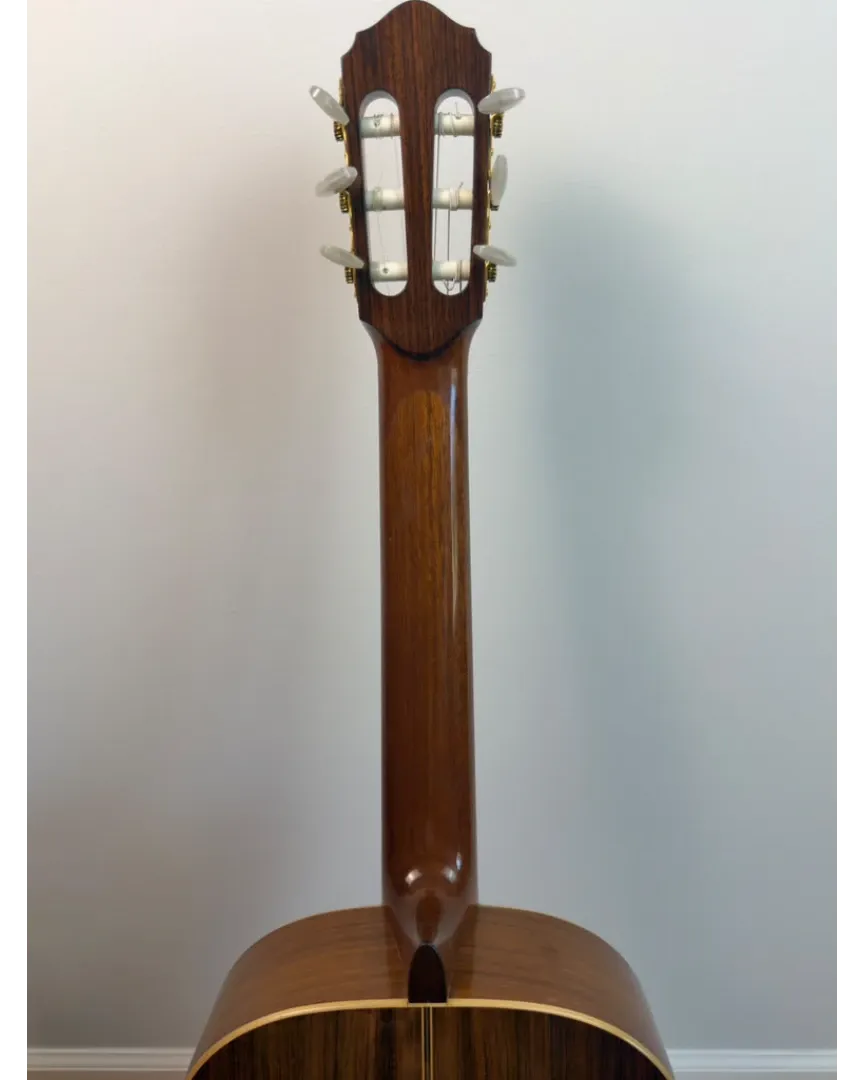
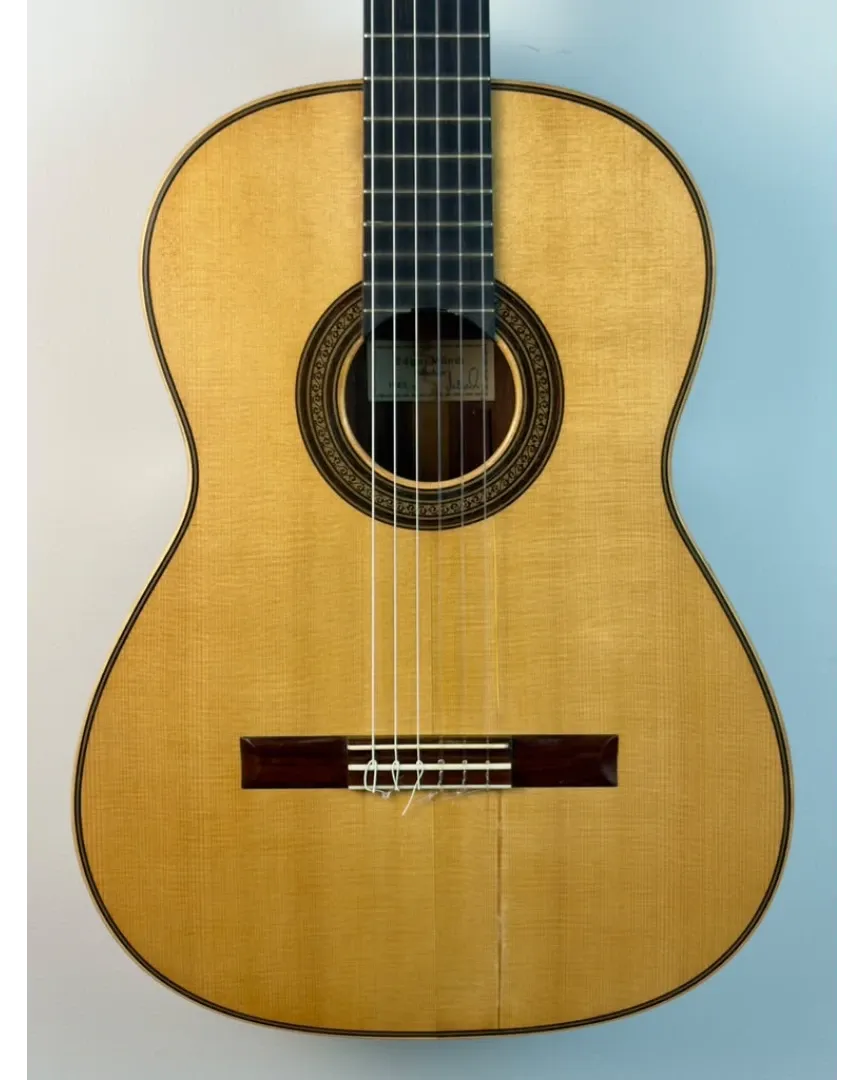
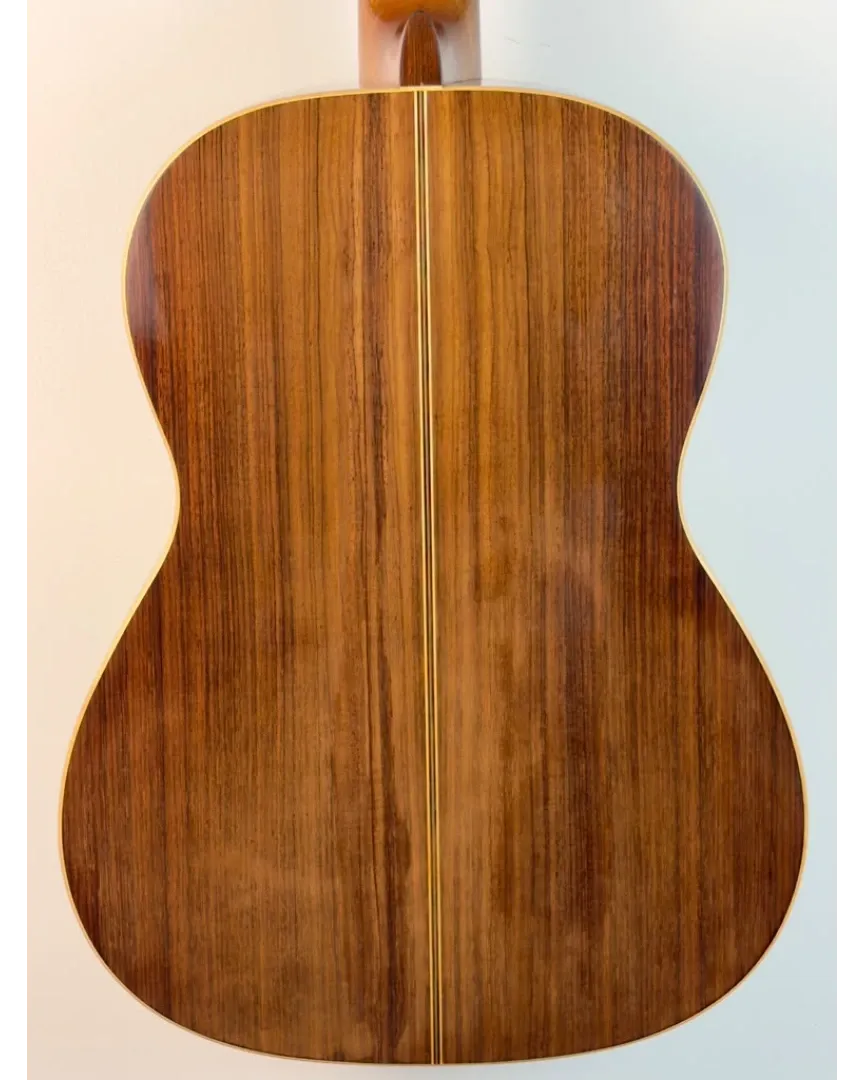
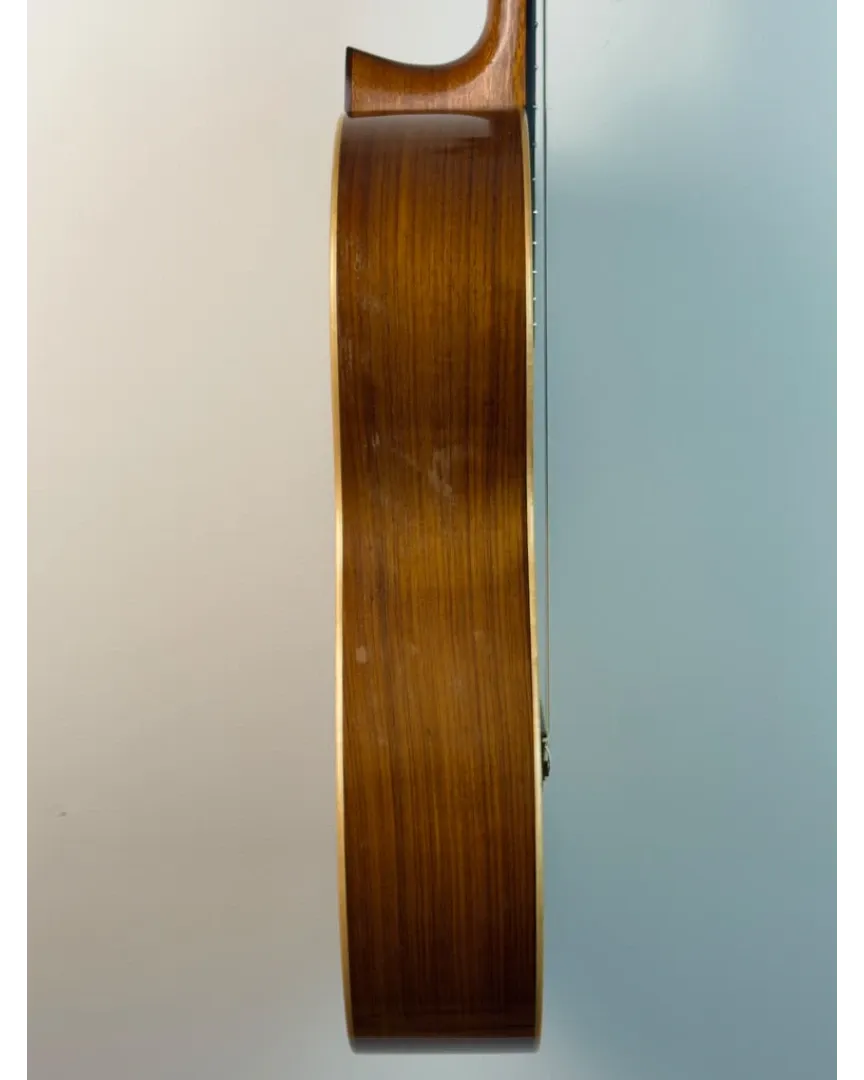
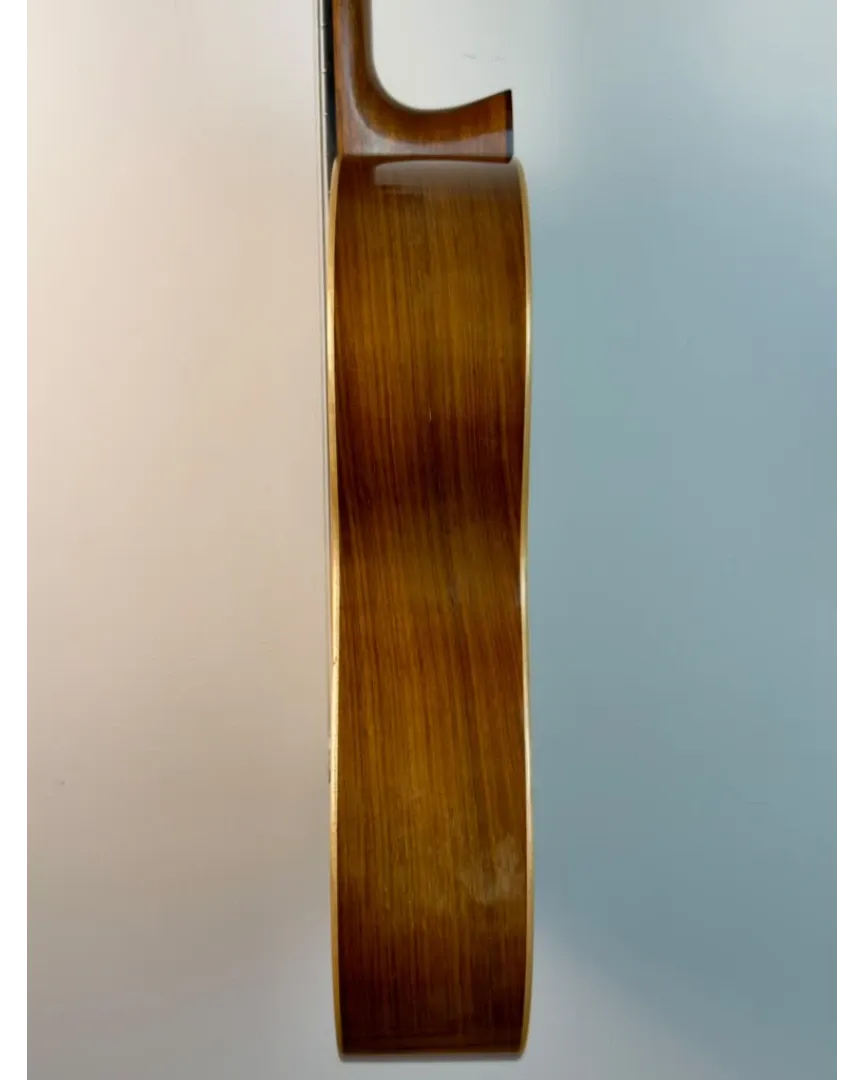
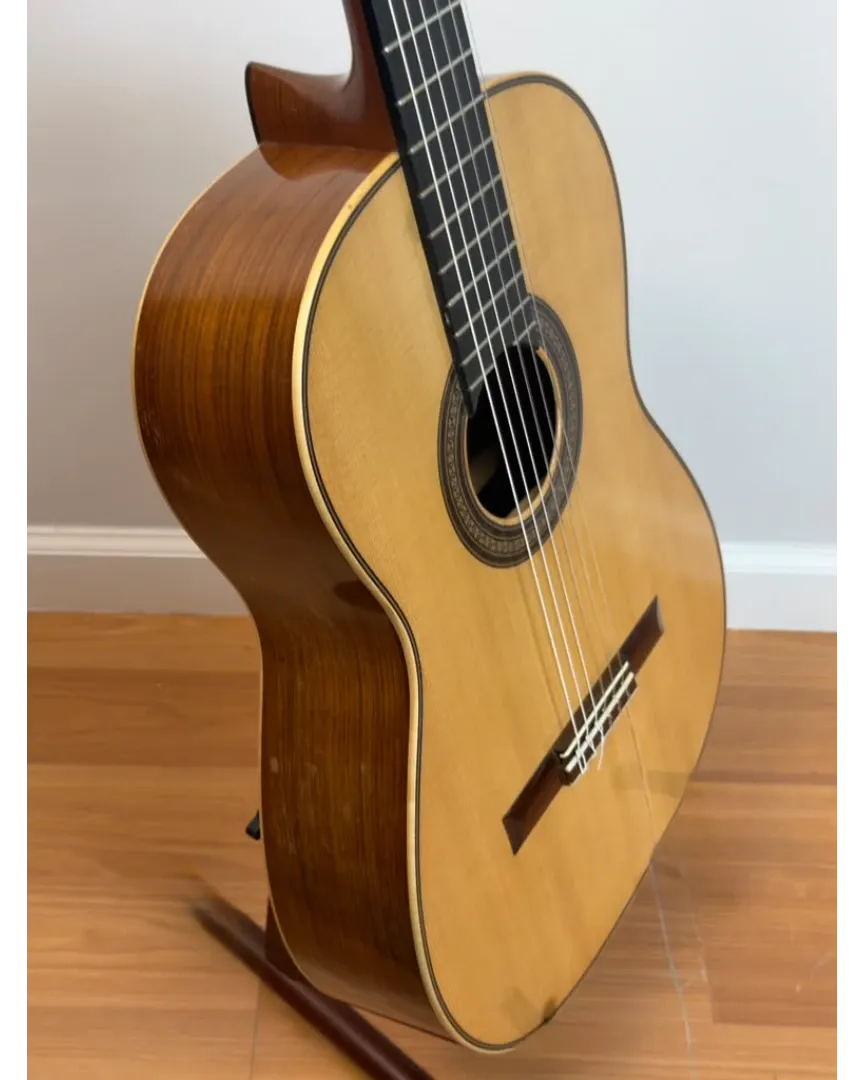
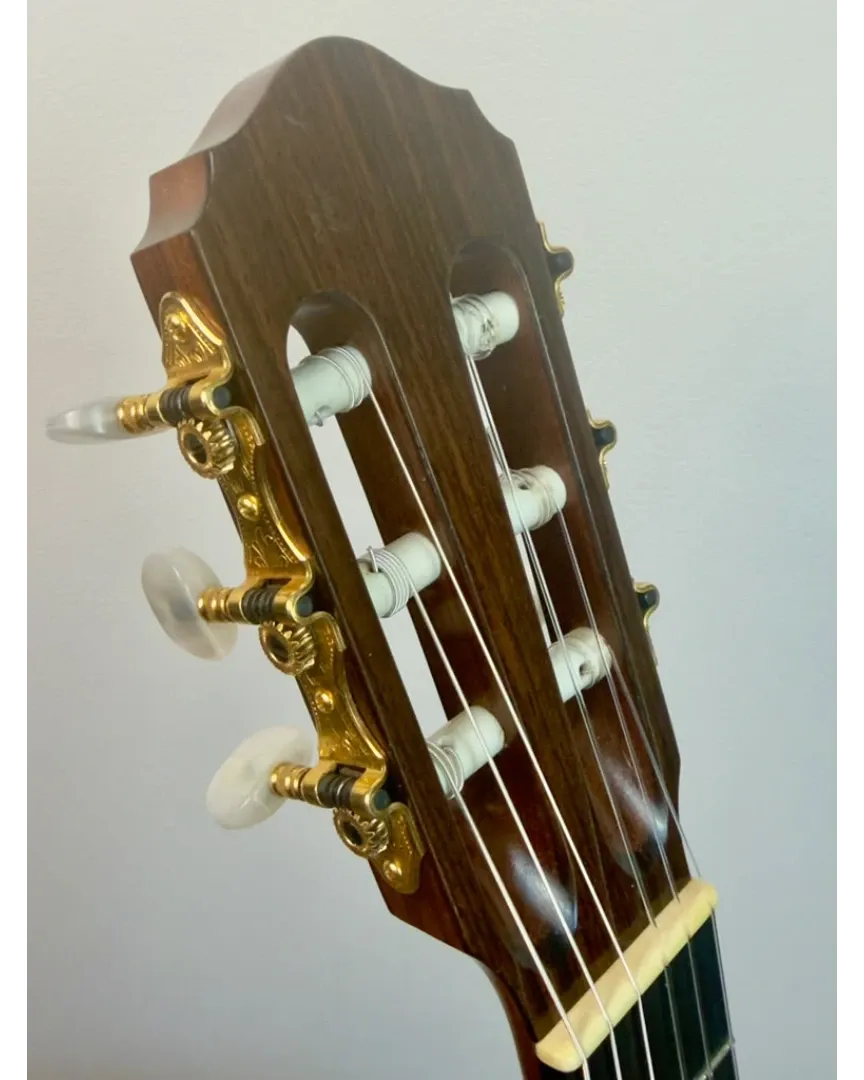
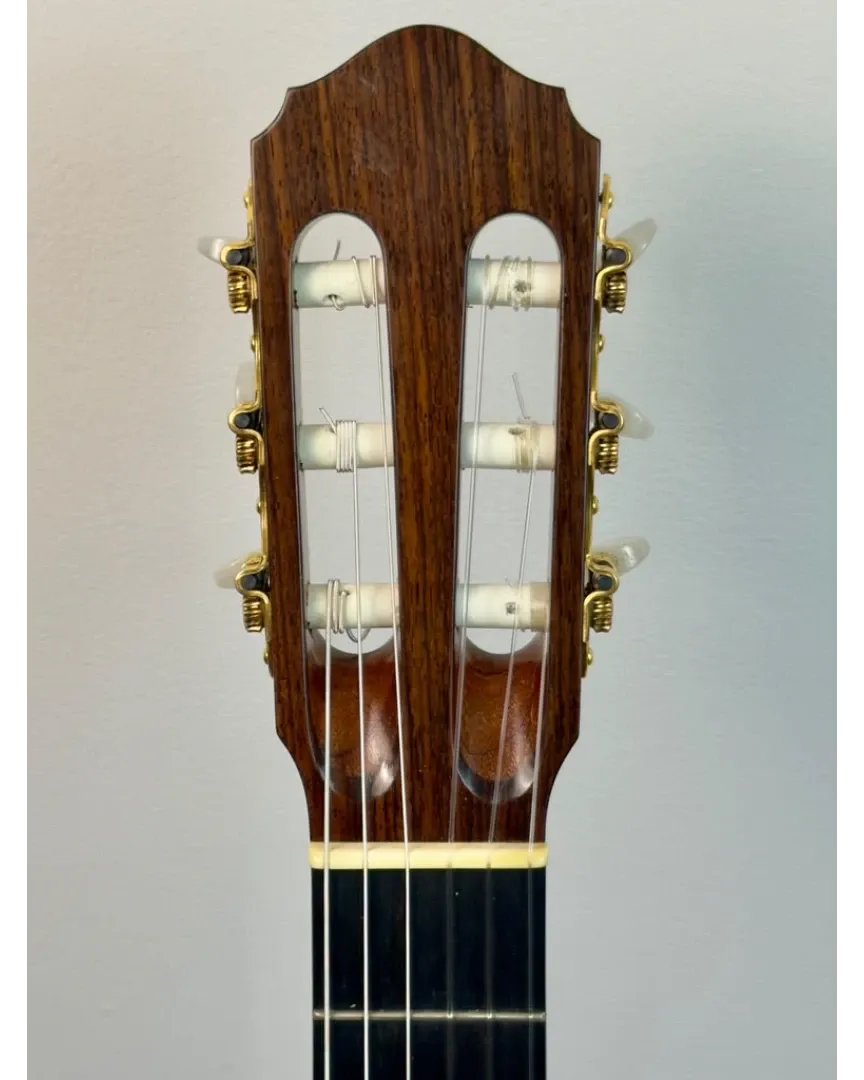
1963 EDGAR MONCH - CONCERT CLASSICAL SPRUCE
SOLD
Specifications
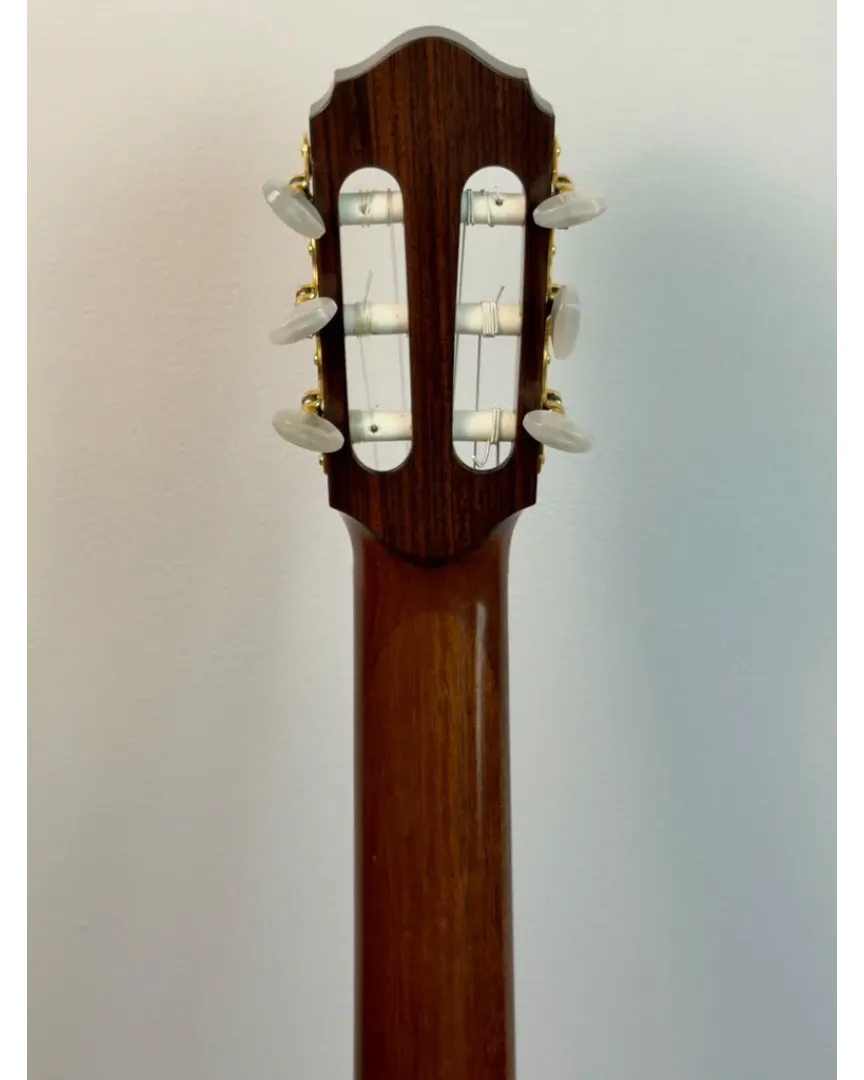
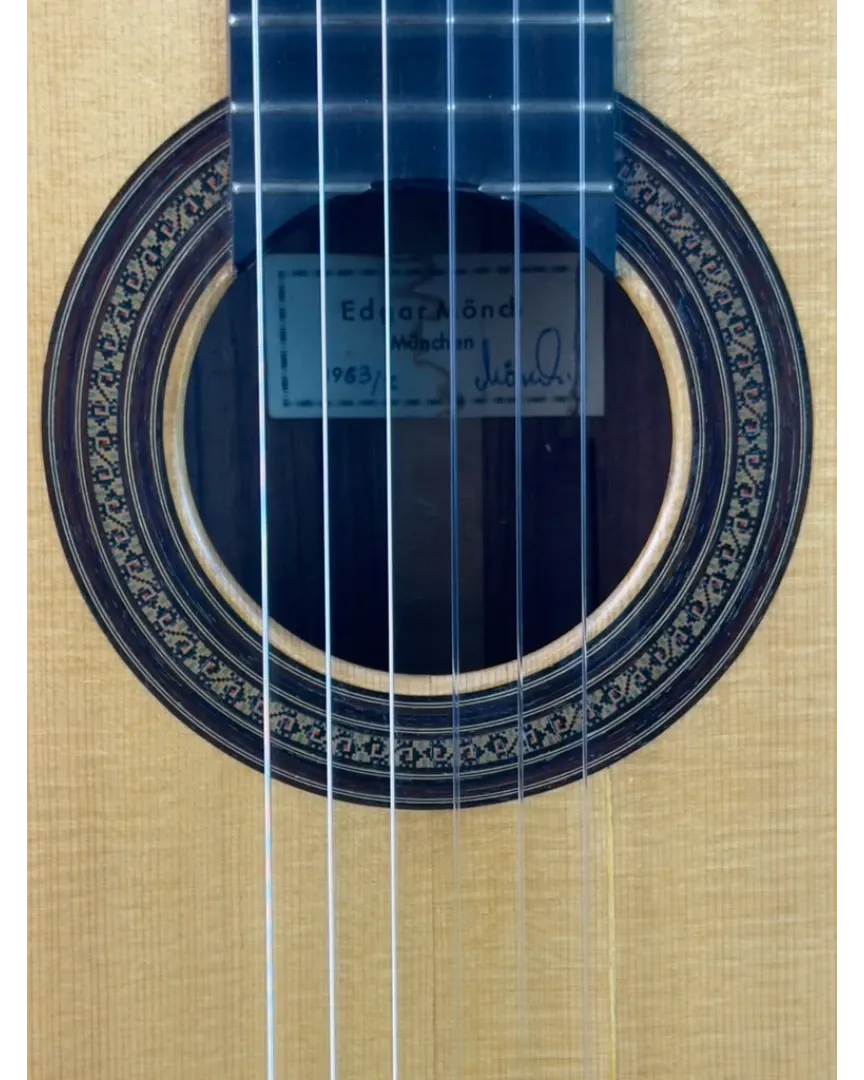
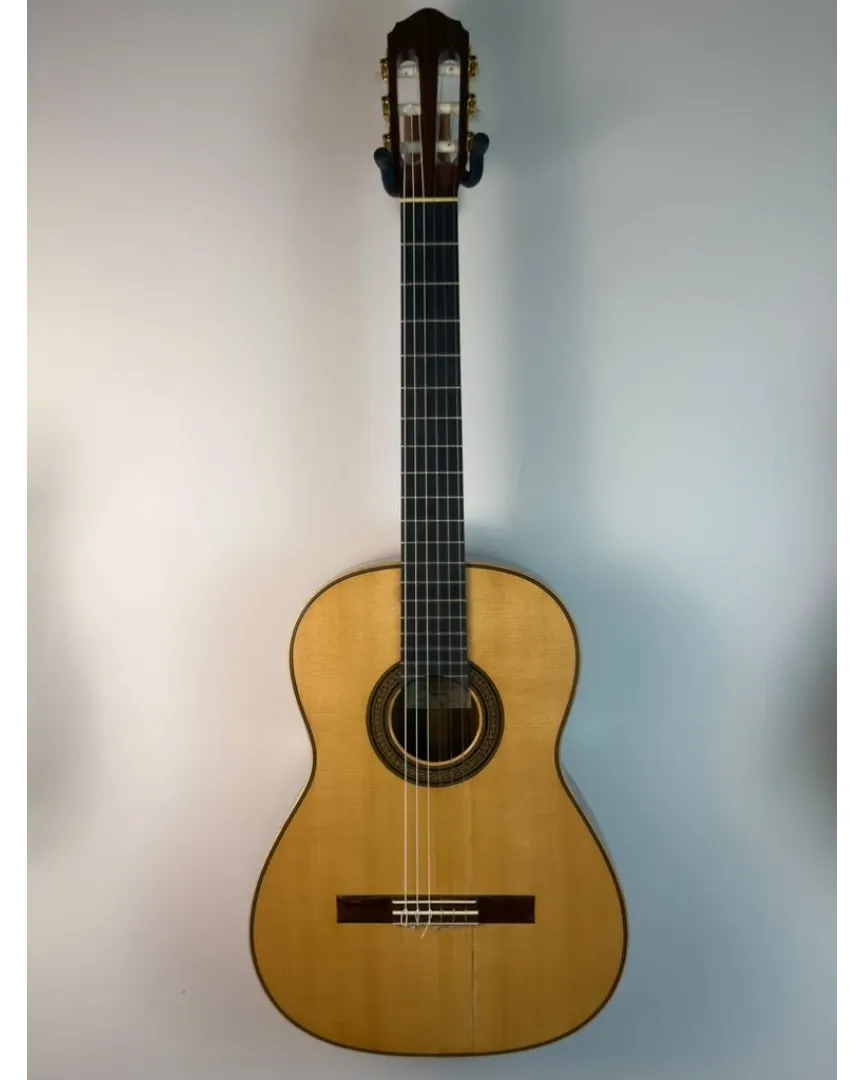
• Top: Spruce (fine-to-medium grain) | Back & Sides: Indian Rosewood
• Finish: French Polish
• Bracing: 5-fan with 2 bottom chevrons
• Kerfing: Cut kerfing (top), single liner (back)
• Nut Width: 52 mm
• Scale Length: 650 mm
• Action – Bass side: 3.1 mm
• Action – Treble side: 3.2 mm
• Weight: 47 oz (approx. 3 lbs)
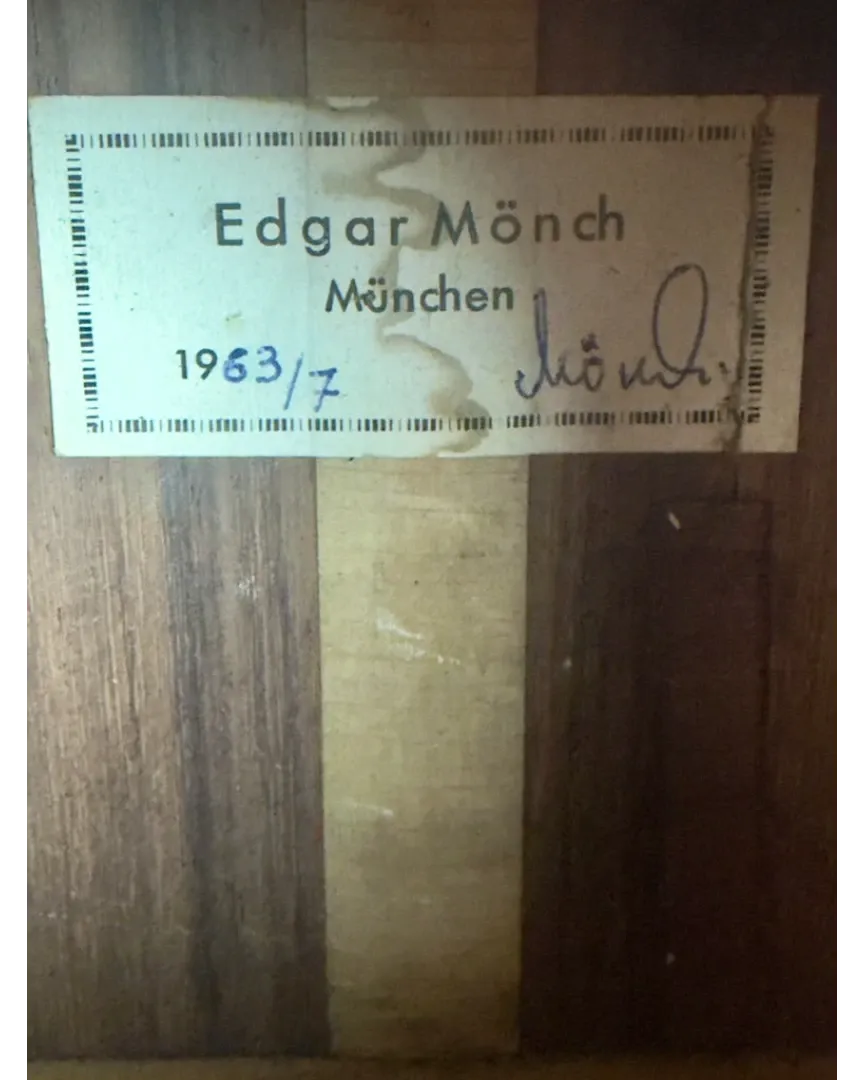
• Signed and dated: July 1963, Munich
• Condition: Two splined top cracks; full-length back crack cleated with rosewood
Edgar Mönch (1907–1977) occupies a singular place in the history of the classical guitar — a German master builder whose story reads like a novel and whose instruments were played by the greatest concert guitarists of the 20th century. Born in Leipzig, Mönch spent his childhood in Russia before studying mechanical engineering in Gdańsk and working as a technical interpreter at the Škoda Works in Prague, where he also studied violin at the conservatory. His path to lutherie came through an unlikely door: as a German prisoner of war in an English camp, he encountered a luthier from Wrocław who taught him to make a guitar. Released from captivity in 1947, he set up a workshop in Ludwigsburg before moving to Munich in 1952, where he would build the instruments that made his name.
In Munich, Mönch studied with the great Spanish luthier Marcelo Barbero in Madrid — absorbing the finest traditions of the Spanish school — and became widely regarded as the most important German classical guitar builder of his era alongside Hermann Hauser. His concert-grade instruments attracted the most distinguished players in the world: Julian Bream recorded an LP with a 1959 Mönch; John Williams played a Mönch as a boy and early in his career; Andrés Segovia, while famously associated with Hauser for performance, is documented as having used a Mönch for practice; Celedonio Romero owned a 1969 model later passed to his son Celín; and Jorge Morel and Vicente Gómez were also among his players. It is unusual — genuinely rare — to encounter a Mönch guitar on the market.
In 1965 Mönch relocated to Toronto, where he remained until 1971 before returning to Germany. His influence on Canadian lutherie was transformative: among the builders he mentored were Jean Larrivée, Linda Manzer, Grit Laskin, and Serge DeJonge — figures who would go on to shape North American lutherie for generations.
This instrument is dated July 1963 and signed — placing it firmly in the heart of Mönch's Munich period, his most celebrated era of production, and just two years before his departure for Canada. The construction reflects both his German precision and his Spanish training: a fine-to-medium grain spruce soundboard, Indian rosewood back and sides, 5-fan braces with 2 bottom chevrons, cut kerfing liner on the top and a single liner on the back, and a French polish finish. The guitar weighs just under three pounds — light and responsive in the hands.
Condition: Two splines in the top — one near the center below the bridge, the other approximately half an inch from the first string toward the wing of the bridge, running above and below the bridge. A full-length crack on the back has been cleated with rosewood. These repairs are consistent with the instrument's age and use, and do not diminish the historical and musical significance of a signed Munich-period Mönch.
This is a once-in-a-career opportunity to own one of the rarest and most historically significant classical guitars to come to market.

COMPANY
FOLLOW US


Copyright 2026. Mill Valley Guitar. All Rights Reserved.