
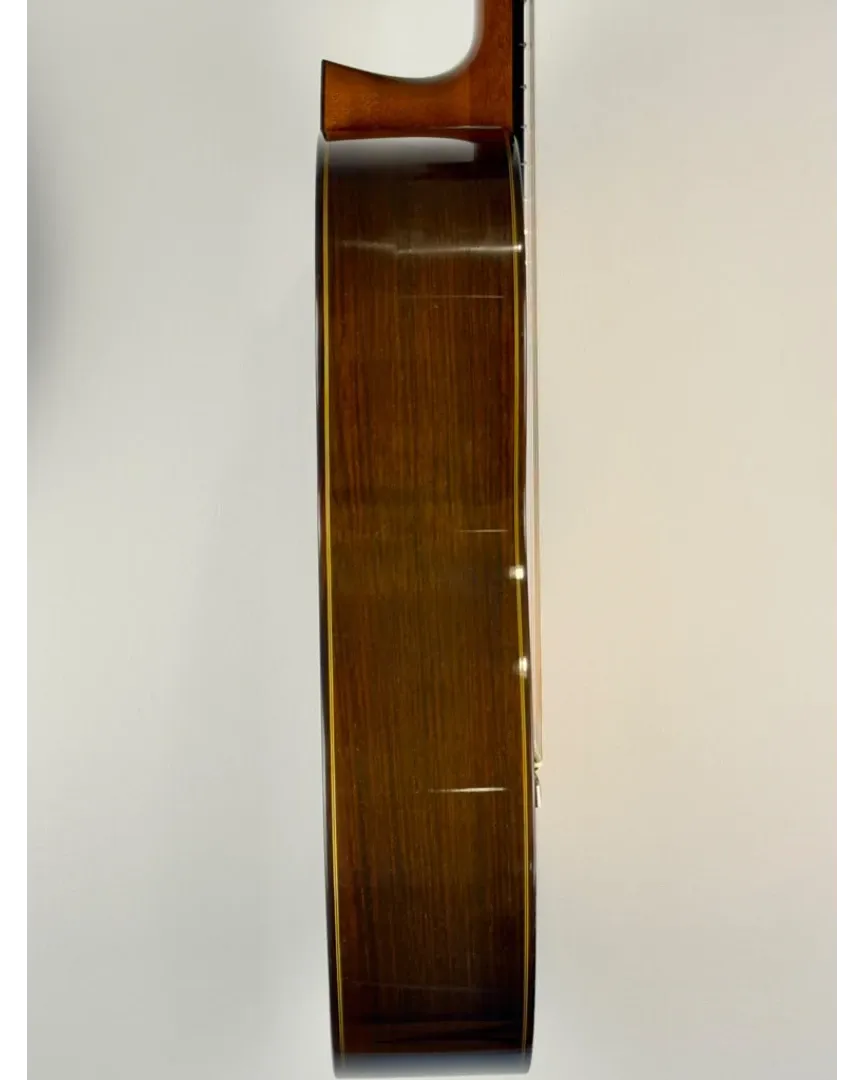
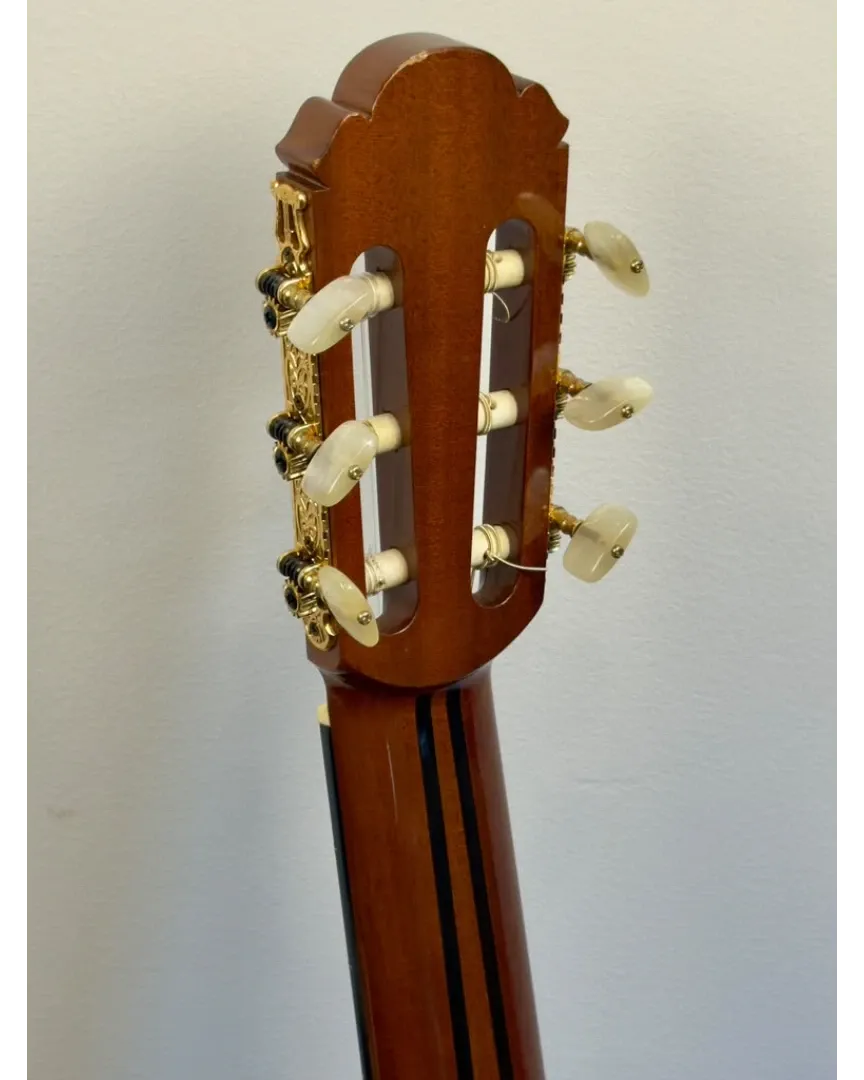
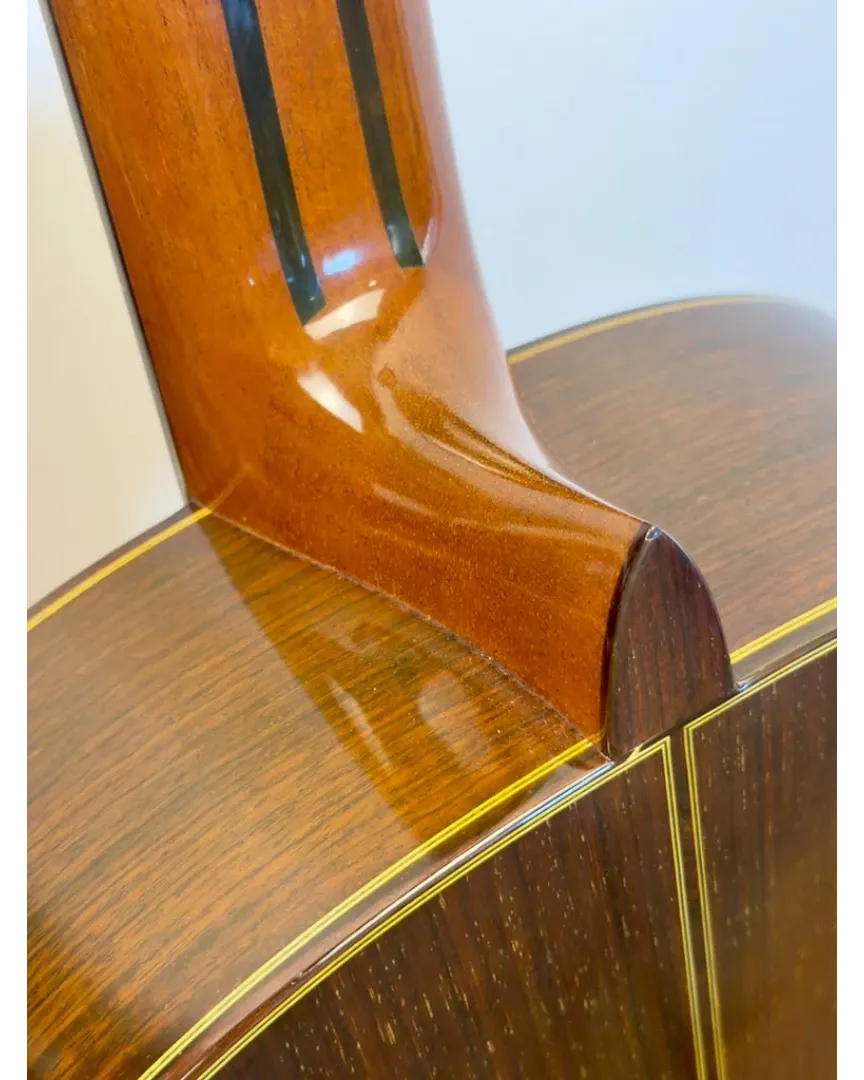
1967 masaru kohno no.6 spruce & indian rosewood
$3,500
Specifications
• Builder: Masaru Kohno, Tokyo, Japan
• Model: No. 6
• Year: 1967
• Top: Spruce | Back & Sides: Indian Rosewood
• Fingerboard: Ebony | Rosette: Traditional mosaic
• Scale Length: 654 mm | Nut Width: 51 mm
• Action – Bass (12th fret): approx. 3.1 mm
• Action – Treble (12th fret): approx. 2.5 mm
• Saddle Exposure: approx. 1 mm
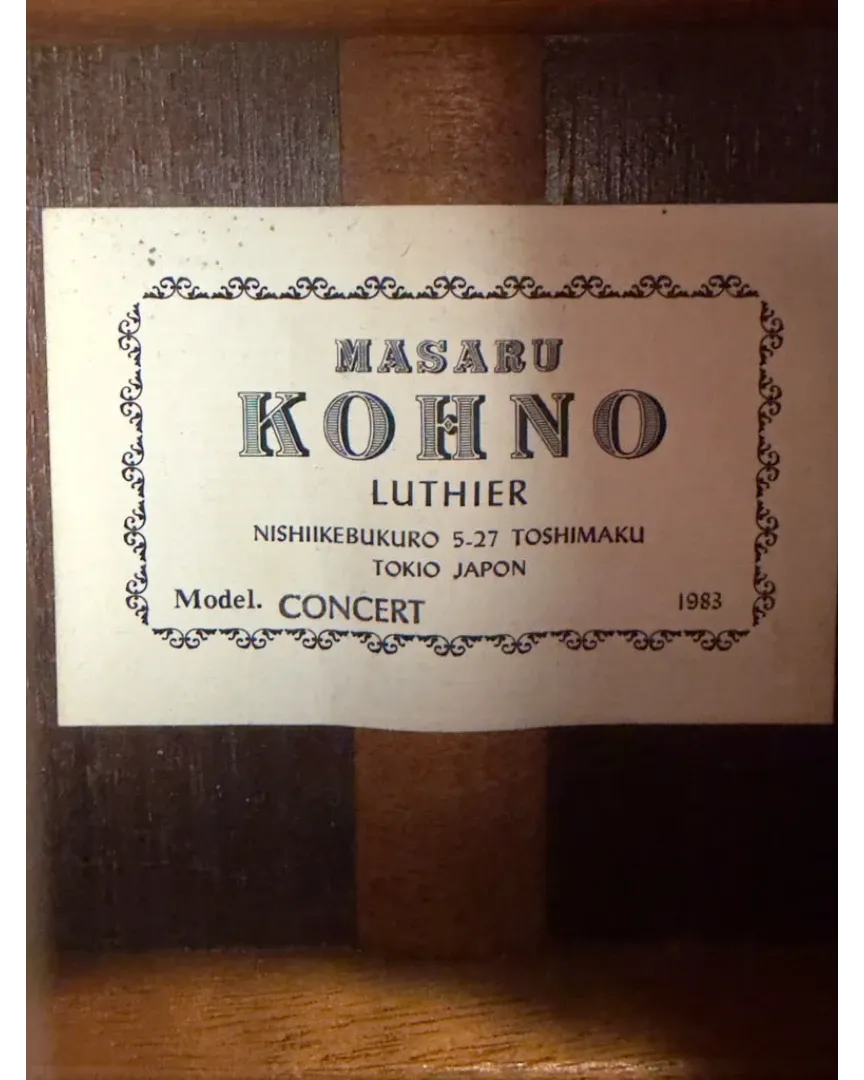
• Labels: Original printed label + handwritten inscription with red maker's seal
• Inscription: 「氏ノ為之製作」— "made for [name]"
• Condition: Two repaired and cleated top cracks; normal cosmetic wear
• Asking Price: $3,500
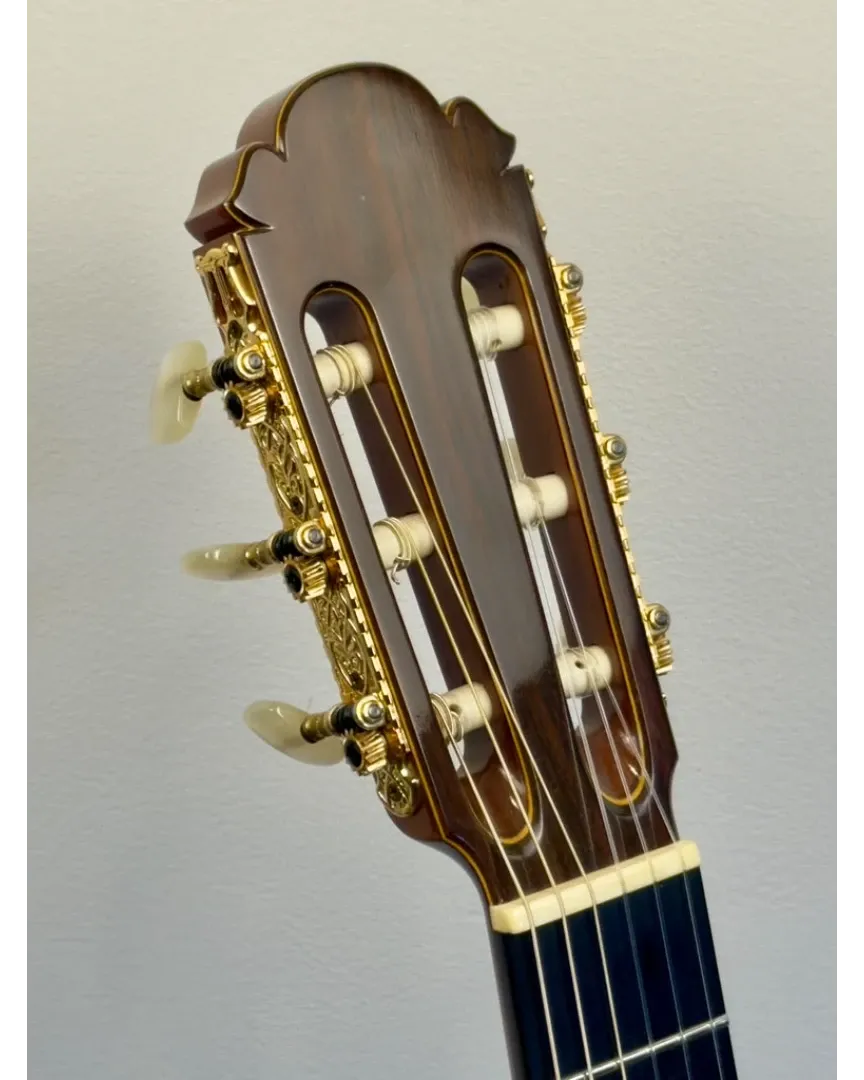
Masaru Kohno (1926–1998) is the most significant classical guitar maker to emerge from Japan, and one of the finest builders of the 20th century by any measure. Born in Mito City, he graduated from the Tokyo College of Arts and Crafts in 1948 with a degree in woodcraft, where his interest in guitar construction first took hold. In 1960 he traveled to Spain, spending time in the workshop of Arcangel Fernandez in a formative apprenticeship before returning to Tokyo to establish his own workshop. The influence of his time in Spain showed immediately: his headstock design shifted toward the style associated with Ignacio Fleta, and the overall aesthetic of his instruments began reflecting the highest traditions of the Spanish school absorbed and reinterpreted through a Japanese sensibility for precision and refinement.
The international breakthrough came in 1967. Kohno entered one of his guitars — unlabeled, as competition rules required — at the Concours National de Guitares in Liège, Belgium, competing against 31 luthiers from around the world. The judging panel was extraordinary: Ignacio Fleta, Robert Bouchet, Joaquín Rodrigo, and Alirio Díaz. Kohno won the Gold Medal outright — First Prize. Fleta, upon examining Kohno's guitar before the results were announced, remarked that it closely resembled his own work. Coming from the man who had trained Kohno, and who sat among the most authoritative judges in the world, it was one of the most significant endorsements in the history of guitar making. Daniel Friederich, the celebrated Parisian luthier, took the Silver. From that moment, Kohno's instruments were recognized not as Japanese approximations of the Spanish school, but as equals to the finest European concert guitars. Julian Bream, Oscar Ghiglia, and Sharon Isbin were among the concert artists who would go on to perform and record on Kohno guitars.
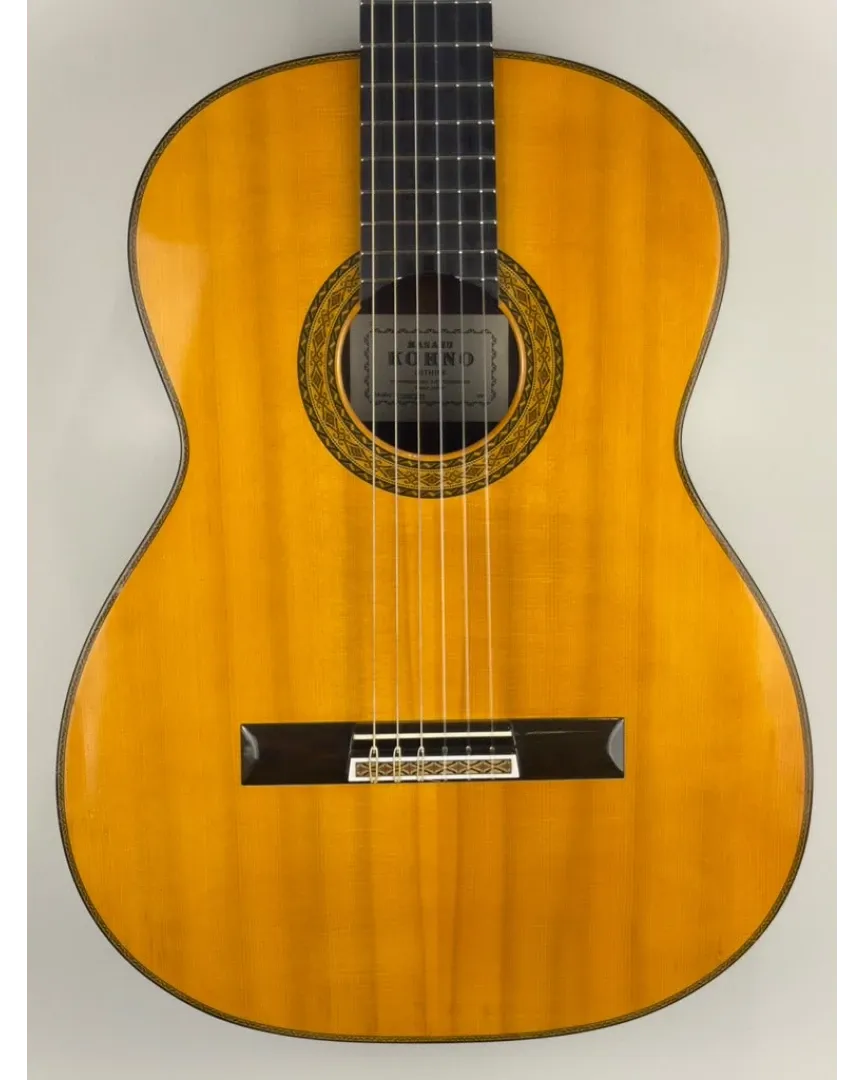
This No. 6 was made in Tokyo in 1967 — the same year as the Liège triumph, and among the instruments that defined Kohno's reputation at its most formative moment. The guitar carries its original printed Kohno No. 6 / 1967 label, but it is distinguished further by a separate handwritten Japanese inscription inside the instrument bearing Kohno's name, the date 1967, and his red maker's seal. The inscription includes the phrase 「氏ノ為之製作」 — translated approximately as "made for Mr. [name]" or "made for [name]" — indicating that this guitar was built specifically for its original recipient rather than as a standard production instrument. The recipient's name is difficult to read with certainty and is not speculated upon here, but the inscription and seal are intact and clearly documented in the listing photographs. Personalized inscriptions of this kind are known on other early Kohno instruments and represent an especially compelling feature of this particular guitar.
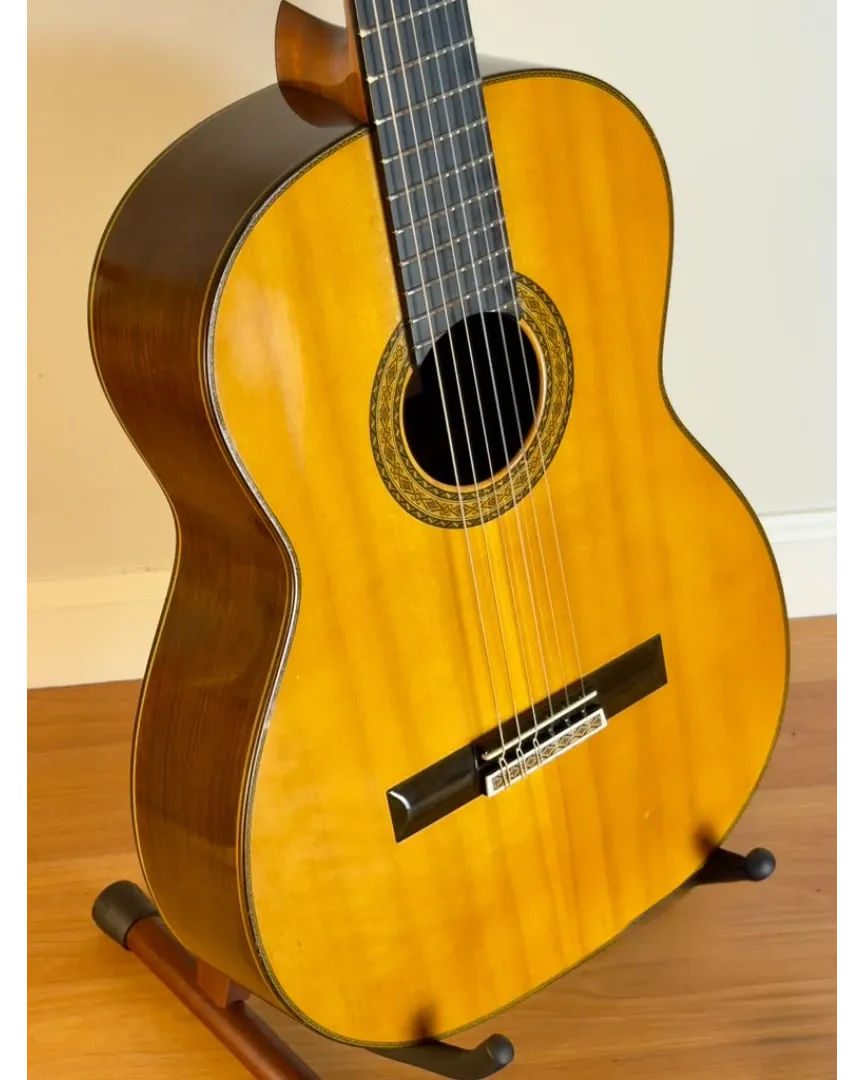
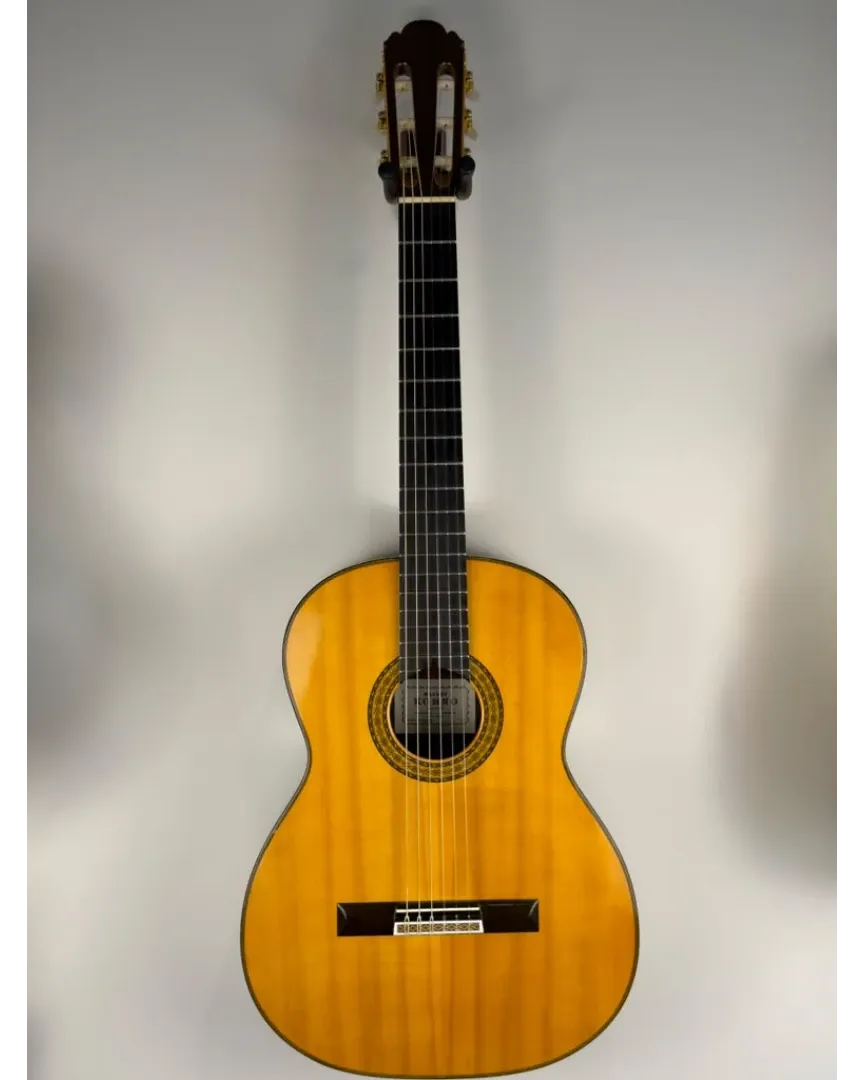
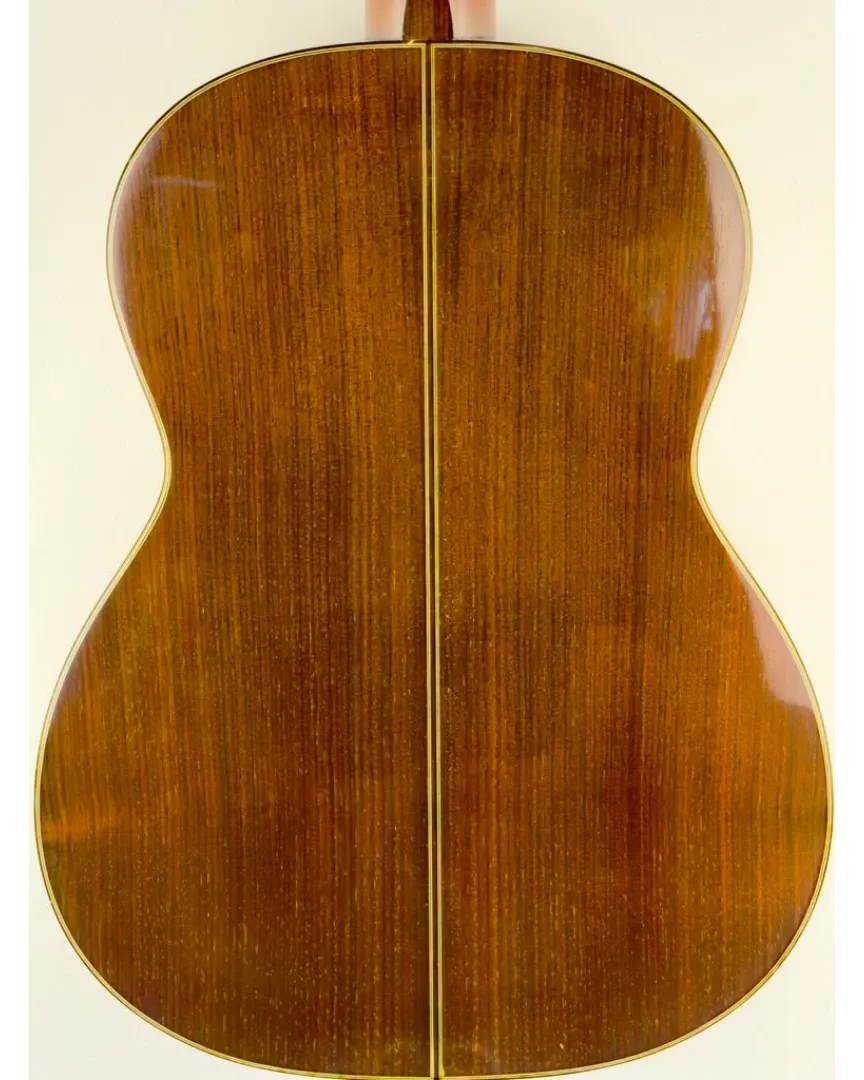
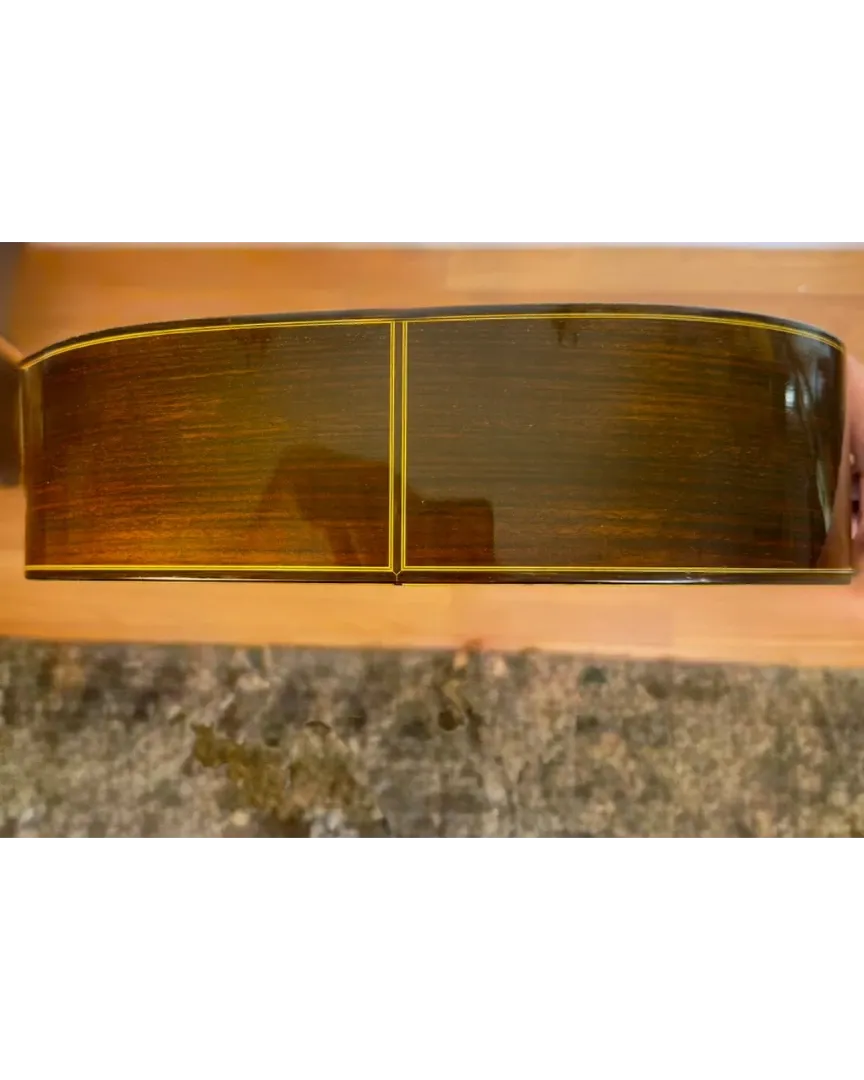
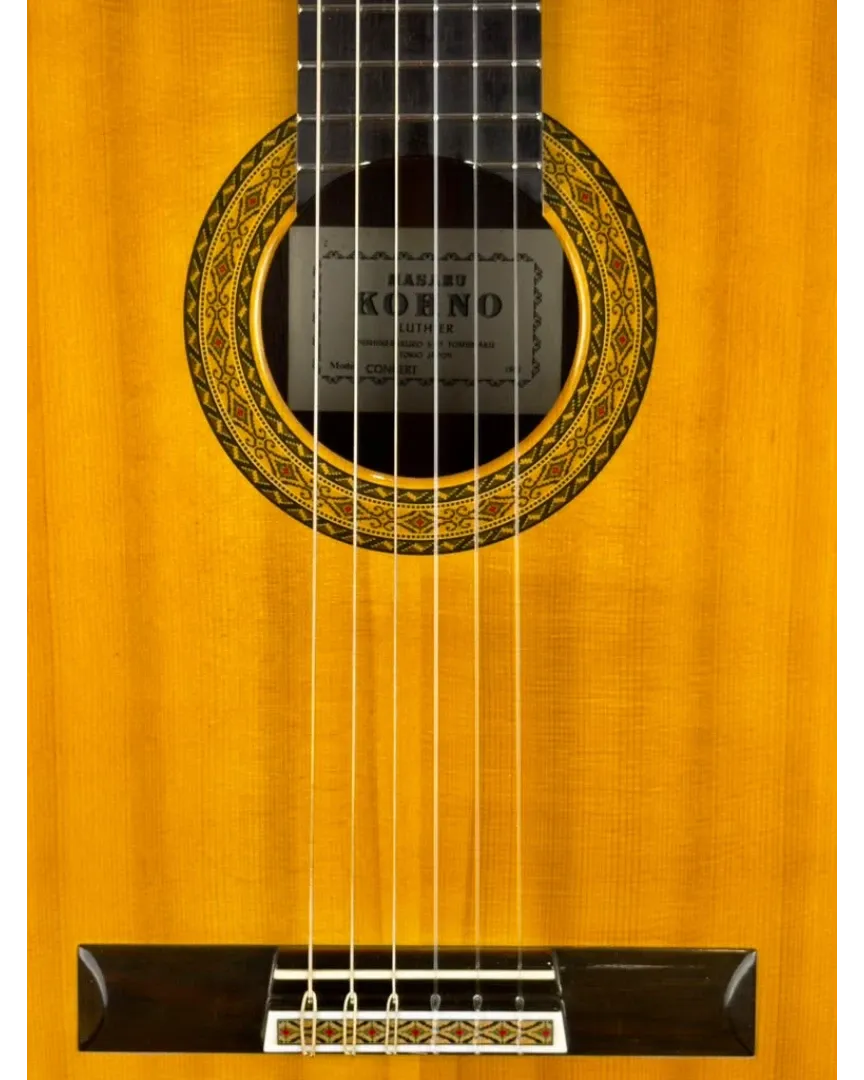
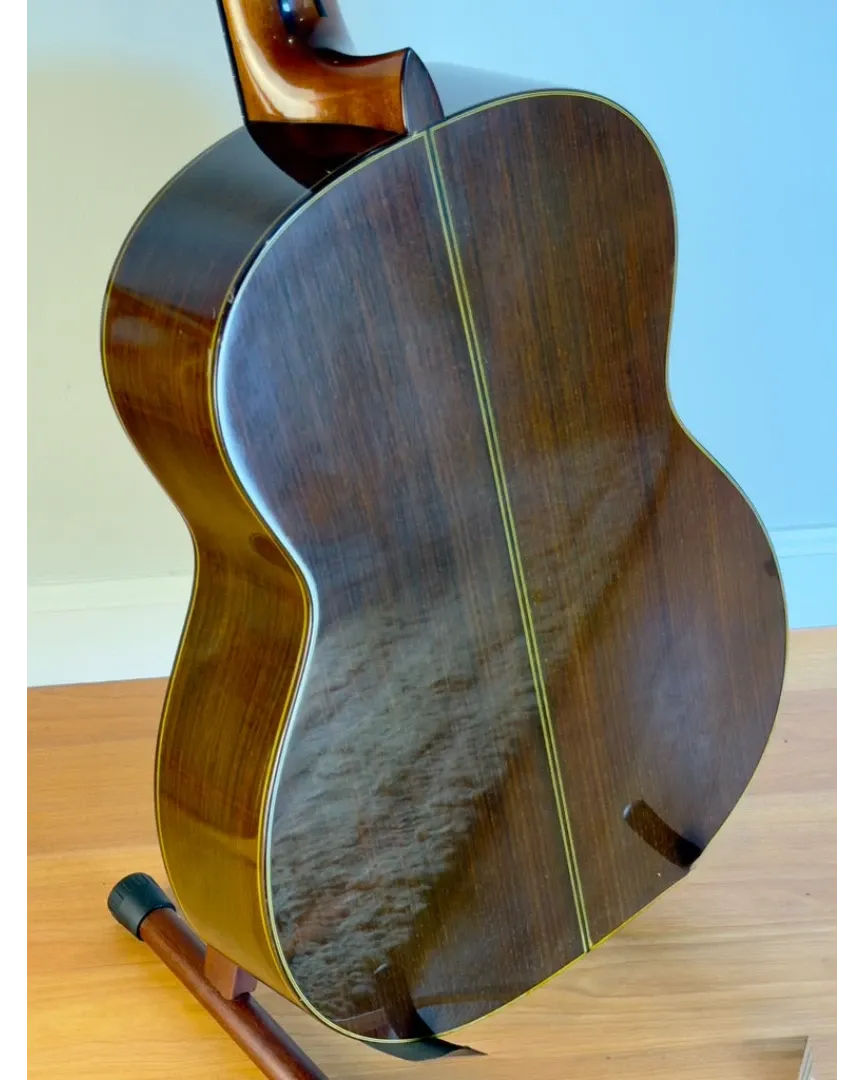
The spruce top has developed a beautiful warm golden color approaching six decades of age. Indian rosewood back and sides remain particularly attractive. Ebony fingerboard. Traditional mosaic rosette. The guitar has a 654mm scale length and 51mm nut width — traditional concert proportions while remaining very comfortable in the left hand. Action is approximately 3.1mm bass and 2.5mm treble at the 12th fret, with approximately 1mm of saddle exposed.
Condition: Two repaired and cleated top cracks — both stable and disclosed fully for transparency. Normal cosmetic wear consistent with an instrument approaching 60 years of age.
A rare and historically significant early Kohno from his landmark year, with exceptional provenance.

COMPANY
FOLLOW US


Copyright 2026. Mill Valley Guitar. All Rights Reserved.